China Top Single Phase AC Motor Suppliers?

Time:2026-10-14 Author:Isabella
0%

China has become a major manufacturing base for the Single Phase AC Motor industry. Its suppliers serve pumps, fans, compressors, conveyors, and household equipment worldwide. Yet production scale alone does not prove motor quality.

The International Energy Agency reports that electric motor systems consume roughly half of global electricity. The U.S. Department of Energy also identifies motor systems as a major industrial energy-saving opportunity. These figures make efficiency, durability, and correct sizing commercial priorities. In a workshop, a poorly sized motor may run hot, waste power, and shorten bearing life. Small losses become expensive across thousands of operating hours.

Energy-efficiency specialist Amory Lovins has said, “The cheapest energy is the energy you don’t use.” This principle applies directly to supplier evaluation. Reliable manufacturers should provide tested efficiency data, insulation-class details, thermal protection options, noise measurements, and traceable quality records. Certifications matter, but certificates should support evidence rather than replace it.

This guide examines leading Chinese suppliers through manufacturing experience, product range, export capability, customization, and after-sales support. It also considers practical details, such as copper winding consistency, shaft tolerances, enclosure protection, and performance under voltage fluctuation. These points are easy to overlook.

Some rankings remain subjective. Public factory data can also be incomplete. Therefore, buyers should request test reports, samples, references, and warranty terms before making a final decision. A low purchase price may look attractive, but lifetime operating cost usually tells the clearer story.
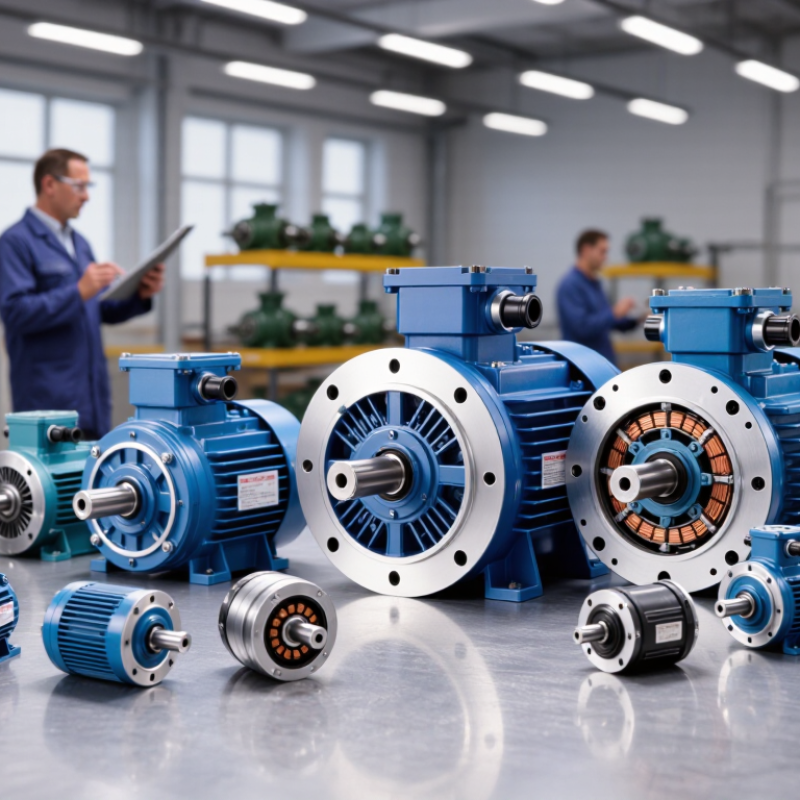
China Top Single Phase AC Motor Suppliers?

What Is a Single-Phase AC Motor?

A single-phase AC motor converts alternating electrical energy into mechanical rotation. It commonly operates from household power supplies. Unlike a three-phase motor, it does not create a naturally rotating magnetic field during startup. The motor needs help to begin turning.

That assistance comes from an auxiliary winding, capacitor, or shaded pole. Common designs include split-phase, capacitor-start, permanent-split-capacitor, and shaded-pole motors. Each design suits different loads. A capacitor-start motor delivers stronger starting torque for pumps and compressors. A shaded-pole motor is simpler, but usually less efficient. Small fans often use permanent-split-capacitor motors.

In practical testing, startup sound can reveal problems. A loud hum, slow acceleration, or unusual heat may indicate capacitor failure, overload, or poor ventilation. The nameplate matters, but it is not the whole story. Real performance changes with voltage, ambient temperature, shaft load, and installation quality. When comparing suppliers, check winding insulation, thermal protection, enclosure rating, efficiency data, and load-test records. Ask for clear documentation. A low purchase price can hide higher operating costs. I have found that even a correctly rated motor may perform poorly when the pulley, bearing, or wiring is mismatched. That detail is easy to overlook.

China’s Single-Phase AC Motor Manufacturing Landscape

China Top Single Phase AC Motor Suppliers?

China’s Single-Phase AC Motor Manufacturing Landscape

China’s single-phase AC motor industry combines large factories with specialized workshops. Production is concentrated in coastal manufacturing regions, where supply chains for copper wire, bearings, capacitors, and stamped steel are highly developed. This shortens procurement cycles and supports flexible customization.

The strongest suppliers usually control several stages in-house. Their facilities may include automatic winding machines, rotor balancing stations, load-testing benches, and thermal protection checks. During factory visits, I would inspect winding tension, insulation handling, bearing storage, and final noise testing. The details matter. A clean assembly line is useful, but test records reveal more about real process control.

Suppliers serve pumps, fans, compressors, household equipment, and light industrial machines. Common options include capacitor-start, capacitor-run, and shaded-pole designs. Buyers should compare rated voltage, frequency, duty cycle, efficiency, torque, enclosure protection, and expected operating temperature. A supplier claiming high efficiency should provide test data under defined conditions, not only a catalog figure. Samples can mislead. One batch may perform well while later production shows vibration or temperature variation. Independent inspection, traceable serial records, and pre-shipment testing reduce this risk. Certification documents should also match the exact motor model and destination market, rather than a similar product in the same series.

Key Types and Applications of Single-Phase AC Motors

Single-phase AC motors remain practical choices for homes, workshops, farms, and light industrial equipment. Their simple wiring suits locations without three-phase power. However, motor selection should match the load, starting demand, duty cycle, and operating environment.

Capacitor-start motors deliver strong starting torque. They suit air compressors, pumps, conveyors, and small machine tools. A start capacitor disconnects after acceleration, reducing heat during normal running.

Permanent-split-capacitor motors use a running capacitor continuously. They operate quietly and fit fans, blowers, evaporators, and office equipment.

Shaded-pole motors are compact and inexpensive. Their low starting torque limits them to small fans, timers, and light-duty appliances.

Split-phase motors offer moderate starting performance for workshop equipment and ventilation systems.

Application details matter more than headline power ratings. A pump may need high torque during startup, especially against water pressure. A fan may prioritize low noise and continuous efficiency. Check voltage, frequency, enclosure protection, insulation class, and rated speed before purchasing. Suppliers should provide test records, thermal protection details, efficiency data, and replacement-part support. In practical inspections, loose terminals and poor capacitor quality often cause early failures. Small mistakes matter. Ambient heat can shorten winding life, while frequent starts may overload the starting circuit. Engineers sometimes choose oversized motors for safety, but this can increase cost and reduce operating efficiency. A properly matched motor usually performs better than a larger one.

How to Evaluate China’s Top Motor Suppliers

China Top Single Phase AC Motor Suppliers?

How to Evaluate China’s Top Motor Suppliers

A reliable supplier should prove performance, not merely display a polished website. Request factory registration details, production capacity, and recent inspection records. Review motor drawings carefully, including voltage, frequency, insulation class, efficiency, and shaft dimensions. A small mismatch can stop an entire assembly line. Ask whether the quoted motor is mass-produced or modified for your application.

Samples reveal more than promises. Test starting torque, running temperature, vibration, noise, and current under realistic loads. Record results after several hours, not only during a brief demonstration. Examine copper winding quality, bearing fit, terminal protection, and housing finish. Request test reports linked to serial numbers. Independent laboratory verification adds credibility, especially for large orders.

Supply stability matters too. Check component traceability, quality-control procedures, packaging strength, and replacement-part availability. Speak with technical staff, not only sales representatives. Their answers should be specific and consistent. I have found that factory visits expose practical details, such as crowded testing areas or unclear labeling. Still, one visit cannot prove long-term reliability. No checklist is perfect. Compare several samples, clarify warranty limits, and document every acceptance requirement before signing.

China Top Single Phase AC Motor Suppliers? - How to Evaluate China’s Top Motor Suppliers
Evaluation Dimension Suggested Weight Practical Benchmark Evidence to Request Why It Matters
Motor Type and Application Fit 10% Correct capacitor-start, capacitor-run, shaded-pole, or other single-phase configuration for the intended load. Motor datasheet, application chart, load profile, starting-torque data, and duty-cycle confirmation. A motor with the wrong starting method or duty rating can overheat, stall, or fail prematurely.
Rated Voltage and Frequency 8% Configuration matched to the target market, such as 110/115 V or 220/230/240 V at 50 or 60 Hz. Nameplate sample, wiring diagram, voltage-tolerance specification, and frequency compatibility statement. Voltage and frequency mismatches affect speed, current, temperature rise, and service life.
Output Power and Performance 15% Rated output, speed, torque, current, efficiency, and power factor clearly stated under defined test conditions. Performance curve, test report, locked-rotor current, breakdown torque, and no-load/load test results. Comparable performance data makes it possible to evaluate suppliers on engineering results rather than price alone.
Efficiency and Energy Compliance 10% Efficiency classification and test method aligned with IEC 60034-30-1 or the applicable destination-market requirement. Efficiency report, test laboratory details, rated-load test data, and applicable conformity documentation. Higher efficiency can reduce operating costs and support energy-label or regulatory requirements.
Insulation and Temperature Rise 10% Insulation system suitable for the operating environment; temperature-rise limit defined for the specified duty. Insulation-class declaration, winding-resistance records, hipot test results, and temperature-rise report. Thermal performance is a major indicator of reliability, especially in continuous-duty applications.
Protection and Environmental Suitability 8% Ingress-protection level selected according to the installation environment, such as IP44, IP54, or higher where justified. IP test report, enclosure drawing, cooling method, ambient-temperature range, and humidity or corrosion guidance. The enclosure must protect electrical and mechanical parts from dust, moisture, and accidental contact.
Bearing, Shaft, and Mechanical Design 8% Shaft dimensions, mounting arrangement, bearing specification, rotation direction, and allowable radial or axial load clearly defined. Mechanical drawing, bearing details, dimensional tolerances, vibration limits, and balancing records. Mechanical compatibility prevents installation problems, abnormal vibration, and premature bearing wear.
Quality Management System 10% Documented production controls, traceability, calibration management, corrective actions, and a valid ISO 9001 certificate where applicable. Certificate scope, audit records, process-control plan, incoming-material controls, and batch traceability samples. A controlled quality system improves consistency across production batches.
Routine and Type Testing 8% Routine tests performed on each motor or defined production batch, including electrical safety and functional checks. Routine-test checklist, test equipment calibration certificates, sample reports, and type-test documentation. Testing reduces the risk of shipping motors with winding, insulation, assembly, or performance defects.
Safety and Market Compliance 8% Documentation aligned with the destination market, including applicable electrical-safety, EMC, environmental, and labeling requirements. Declarations of conformity, safety reports, EMC results where required, labels, manuals, and compliance matrix. Correct compliance documentation supports customs clearance, product approval, and lawful market access.
Customization Capability 5% Ability to adjust mounting, shaft, cable, connector, brake, capacitor, thermal protection, paint, or packaging within controlled specifications. Engineering-change procedure, approved drawings, prototype process, minimum order quantity, and sample lead time. Controlled customization is valuable when standard catalog dimensions do not match the equipment design.
Supply Capacity and Lead Time 5% Capacity and delivery schedule supported by production planning, key-component availability, and realistic order forecasts. Capacity statement, production schedule, average lead-time record, supplier-risk plan, and shipment history. Reliable delivery reduces production interruptions and the need for costly emergency sourcing.
Warranty and After-Sales Support 5% Written warranty terms, response-time commitment, failure-analysis process, spare-parts policy, and corrective-action procedure. Warranty document, claim workflow, replacement policy, technical-support contacts, and anonymized failure reports. Effective support limits downtime and helps identify recurring installation or product issues.
Total Cost of Ownership 8% Evaluation includes purchase price, tooling, testing, packaging, freight, energy consumption, maintenance, and expected service life. Formal quotation, energy-cost assumptions, maintenance intervals, spare-part pricing, and five-year cost model. The lowest purchase price may not provide the lowest lifetime cost.

Sourcing, Quality Control, and Supplier Verification Steps

China Top Single Phase AC Motor Suppliers?

Finding reliable single-phase AC motor suppliers requires more than comparing online prices. Request factory registration details, production capacity, and recent export experience. Ask for motor drawings, rated voltage, frequency, power output, insulation class, and protection rating. A serious supplier should explain these specifications clearly, not hide behind general claims. In practice, small differences in winding design can affect starting torque, noise, and operating temperature.

Sourcing should include a sample order before mass production. Test the sample under realistic load conditions, including repeated starts and extended running. Check current consumption, vibration, temperature rise, shaft alignment, and terminal security. Review incoming inspection records and calibration certificates for testing equipment. These documents can be incomplete, so verify important figures independently. I once treated a supplier’s test sheet as final evidence; that was too optimistic.

Tips: Compare three suppliers using the same technical checklist. Request photos of winding, bearings, and final inspection stations. Confirm whether key parts come from approved sources. Use a third-party inspection when order value or application risk is high. Ask for corrective-action records, not only attractive samples. Also clarify packaging, replacement procedures, and warranty limits in writing. A factory may pass a sample test yet struggle with consistent production. Keep communication records, signed specifications, and batch results throughout the purchase.

FAQS

Where are single-phase AC motor suppliers commonly located in China?

Many suppliers operate in coastal manufacturing regions. These areas offer copper wire, bearings, capacitors, and stamped steel nearby. Shorter supply routes can support faster customization. Location alone proves little.

Which single-phase AC motor types are commonly available?

Common types include capacitor-start, capacitor-run, shaded-pole, and split-phase motors. Capacitor-start motors provide strong starting torque for pumps and compressors. Capacitor-run motors suit fans and blowers. Shaded-pole motors fit small, light-duty equipment.

How should buyers match a motor to an application?

Check voltage, frequency, load, starting demand, duty cycle, and operating temperature. A pump may need strong torque against water pressure. A fan may need quiet, continuous operation. A larger motor is not always better.

What technical documents should a supplier provide?

Request drawings showing voltage, frequency, shaft dimensions, insulation class, and rated speed. Ask for efficiency data, thermal protection details, and test records. Documents should match the exact motor model. Similar paperwork is not enough.

How can buyers test motor samples effectively?

Test starting torque, running temperature, vibration, noise, and current under realistic loads. Run samples for several hours. A short demonstration can hide later heating problems. Samples still cannot predict every production batch.

What factory details deserve close inspection?

Inspect winding tension, insulation handling, bearing storage, and final noise testing. Look at automatic winding equipment and rotor balancing stations. Check whether test records link to serial numbers. A clean floor helps, but records matter more.

How can buyers reduce quality risks during mass production?

Use independent inspections and pre-shipment testing. Request traceable serial records and component information. Define acceptance requirements before signing. Later batches may show vibration or temperature variation.

What problems can cause early motor failure?

Loose terminals, weak capacitors, excess heat, and frequent starts can shorten motor life. Poor bearing fit may increase noise and vibration. Ambient heat can damage windings over time. I may overlook something without long-term testing.

What should buyers check about after-sales support?

Confirm warranty limits, replacement-part availability, and technical response procedures. Ask whether support covers capacitors, bearings, terminals, and winding issues. Speak with technical staff, not only sales personnel. Promises can remain vague.

Conclusion

A Single Phase AC Motor is an electric motor designed to operate with single-phase alternating current, making it a practical choice for homes, small businesses, workshops, and light industrial equipment. China has developed a broad manufacturing landscape for these motors, offering products in various power ranges, frame sizes, efficiency levels, and configurations. Common types include capacitor-start, capacitor-run, and shaded-pole motors, which are used in fans, pumps, compressors, household appliances, ventilation systems, and other equipment requiring reliable, moderate power.

When evaluating China’s top motor suppliers, buyers should consider technical capabilities, production capacity, product consistency, energy efficiency, customization support, and after-sales service. A careful sourcing process should include reviewing certifications, factory qualifications, quality-control procedures, sample testing, documentation, and production inspections. Supplier verification through clear specifications, independent testing, transparent communication, and small initial orders can help reduce purchasing risks and ensure that the selected motor meets performance, safety, and long-term operating requirements.

Isabella

Isabella

Isabella is a dedicated marketing professional with a sharp focus on driving brand growth and engagement through strategic content creation. With an extensive background in digital marketing, she combines her passion for storytelling with her keen understanding of industry trends to deliver......