China’s Permanent Magnet Motor industry has become a vital part of modern motion technology. Its manufacturers serve electric vehicles, industrial automation, compressors, pumps, robotics, and renewable-energy systems. Their products may look similar in catalogs, yet performance can differ sharply under real operating conditions.
As motor expert Austin Hughes wrote, “The electric motor is the workhorse of industry.” This observation remains relevant when evaluating China’s leading suppliers. A strong manufacturer must offer more than impressive efficiency figures. It should demonstrate stable magnet quality, precise rotor balancing, effective thermal management, and dependable production control. Factory testing matters. So does field support.
This guide examines ten prominent Chinese manufacturers through practical criteria. These include product range, rated efficiency, customization ability, production scale, export experience, certifications, and after-sales service. Attention is also given to application fit, because a motor designed for a quiet servo system may not suit a dusty factory pump. Small details matter.
No ranking is perfect. Public information can be incomplete, and company performance may change over time. Some suppliers communicate their engineering strengths clearly; others provide limited technical evidence. That gap deserves reflection. Buyers should verify test reports, operating curves, warranty terms, and sample performance before making a final decision.
The following selection is intended as a practical starting point, not an absolute verdict. It highlights manufacturers worth examining when reliability, energy savings, and long-term operating value matter. Efficiency looks attractive on paper. Consistency proves it in the field.
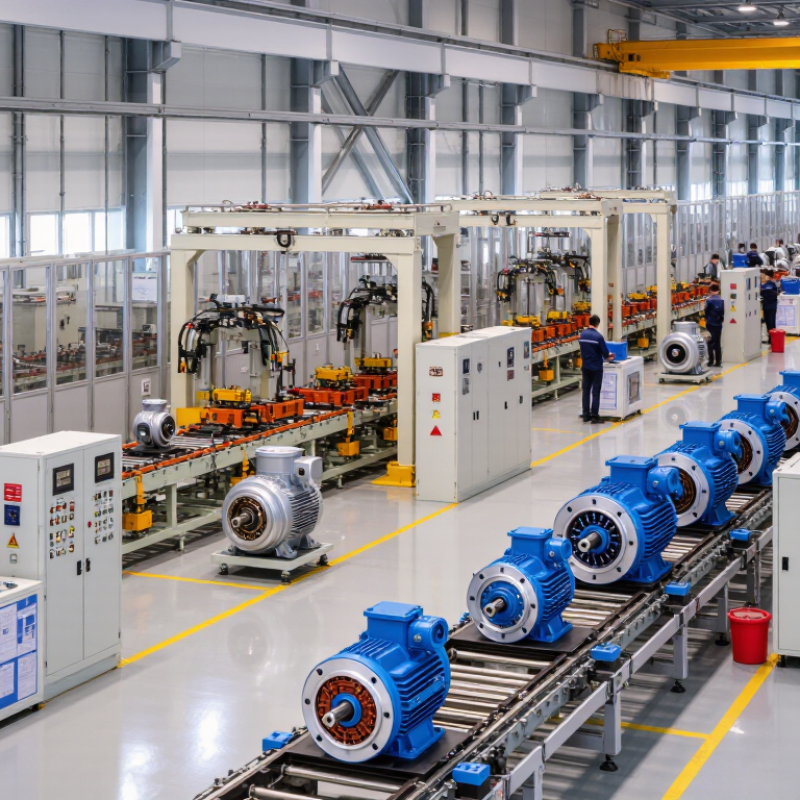
A permanent magnet motor uses permanent magnets to create a magnetic field in its rotor. Unlike an induction motor, it does not need rotor current to produce torque. This design can reduce electrical losses, improve efficiency, and keep the motor compact. The stator receives alternating current, creating a rotating magnetic field. The rotor follows that field. Rare-earth magnets often provide strong output in a smaller package, while ferrite magnets offer lower cost and moderate performance. In practical engineering, the choice depends on speed, load, temperature, and available space. A high-efficiency rating alone is not enough.
Engineers commonly use these motors in electric vehicles, pumps, compressors, fans, robotics, and precision machinery. Their performance is especially useful where frequent speed changes or quiet operation matter. However, permanent magnets can lose strength under excessive heat, and controllers add system complexity. Installation also requires accurate alignment, suitable cooling, and protection against demagnetizing current. I have found that real-world efficiency can differ from catalog figures because duty cycles, friction, and maintenance conditions vary. That gap deserves careful testing. A sensible evaluation measures torque, temperature rise, noise, energy use, and service life under actual operating conditions. The motor may be efficient, but the complete drive system still determines the final result.
China Top 10 Permanent Magnet Motor Manufacturers?
China’s permanent magnet motor industry has changed from basic assembly to integrated engineering. Earlier factories often competed through low prices and large output. Today, many manufacturers invest in magnetic circuit design, rotor balancing, thermal control, and automated winding lines. A modern workshop may track vibration levels beside each testing station. It may also record temperature rise during extended load tests. These details show a stronger focus on reliability, not only production speed.
The industry now serves electric vehicles, industrial pumps, robotics, appliances, and renewable energy equipment. Domestic supply chains have improved access to magnets, bearings, controllers, and precision machining. However, progress is uneven. Some suppliers still depend on copied designs or unclear performance claims. A trustworthy top-ten evaluation should examine test reports, efficiency curves, warranty terms, and after-sales response. Factory visits and sample testing remain more useful than attractive catalogs.
Tips: Compare motors under the same voltage, load, and duty cycle. Ask for continuous-power data, not only peak output. Check insulation ratings and noise measurements. Review whether the supplier explains magnet protection against heat and corrosion. A smaller manufacturer may offer better customization, but its quality records need careful review. The industry is moving quickly, yet even experienced buyers can overlook long-term service conditions.
China’s rapid growth in new energy vehicle adoption has significantly expanded demand for permanent magnet synchronous motors, which are widely used in electric vehicle traction systems. New energy vehicle sales are shown as an industry demand proxy rather than direct permanent magnet motor shipments.
Source: China Association of Automobile Manufacturers annual vehicle sales releases, 2019–2024. New energy vehicle share is calculated from annual NEV sales divided by total vehicle sales.
Evaluating a permanent magnet motor manufacturer requires more than checking production volume. Real engineering experience appears in motor designs, test records, and field performance. Ask for efficiency maps at different speeds and loads. Do not rely on one impressive laboratory figure. A motor used in an industrial pump faces different demands from one installed in an electric vehicle.
Manufacturing control deserves close attention. Inspect magnet sourcing, rotor balancing, winding accuracy, and insulation processes. Traceability should connect each motor to material batches, operators, and test results. Certifications can support credibility, but certificates alone prove little. Request thermal-rise data, vibration limits, ingress protection results, and endurance testing. Data matters. Independent verification is stronger.
A reliable supplier should explain its customization process clearly. Engineers must understand torque requirements, duty cycles, ambient temperatures, installation space, and maintenance conditions. Check whether prototypes are tested under realistic loads, not only on a clean factory bench. Review delivery records, spare-part planning, warranty procedures, and technical response times. A factory visit may reveal more than a polished presentation. Still, one visit cannot expose every weakness. Some manufacturers communicate well but struggle with small-batch consistency. Others produce excellent samples yet lack stable after-sales support. That gap deserves careful questioning before any long-term contract.
China’s top ten permanent magnet motor manufacturers represent different strengths, not one identical business model. Several focus on industrial automation, producing compact servo motors with precise feedback and low vibration. Others serve elevators, compressors, pumps, or electric vehicles, where thermal control matters more than compact size.
One established group combines in-house magnet sourcing with automated winding lines. This can improve consistency, although supply risks still require review. Another specializes in high-efficiency motors for factory equipment. Its test reports should show torque, temperature rise, and efficiency at several loads. A third manufacturer develops water-cooled units for demanding duty cycles. Coastal factories often provide export experience, while inland producers may offer competitive production costs.
The remaining profiles include suppliers of direct-drive motors, geared systems, low-voltage units, and custom designs. Some maintain laboratories for rotor balancing and electromagnetic simulation. Others rely heavily on external components. That difference matters. A polished website is not technical proof. Factory capacity can also be overstated.
Tips: Ask for recent test records, insulation-class details, magnet grades, noise data, and warranty terms. Request a sample motor. Measure its temperature after continuous operation, not after a short demonstration. Check whether the supplier can explain failures clearly. No manufacturer is perfect. That includes the strongest candidates. A careful buyer should compare documented performance, production stability, service response, and total operating cost before selecting a long-term partner.
How to Choose the Right Chinese Permanent Magnet Motor Manufacturer
Choosing a Chinese permanent magnet motor manufacturer requires more than comparing prices. Start with your operating conditions, including torque, speed, voltage, duty cycle, ambient temperature, and installation space. A capable supplier should convert these details into a clear motor specification. Ask for efficiency curves, thermal data, insulation class, bearing information, and test records. Do not accept vague performance promises. Ask for evidence.
Factory capability matters as much as engineering knowledge. Review production equipment, winding processes, rotor balancing, magnet fixation, and end-of-line testing. Request sample inspection reports and traceability records for critical materials. Verify relevant certifications and whether testing follows recognized international standards. A polished factory tour can still hide weak process control. Independent audits may reveal gaps that photographs cannot show.
Communication deserves careful attention. The manufacturer should answer technical questions directly and explain design limits without exaggeration. Confirm prototype timelines, minimum order quantities, spare parts support, warranty terms, and response procedures. A small pilot order can expose packing, documentation, noise, vibration, and delivery problems early. Test it properly. Price is only one factor. A lower quotation may conceal higher integration costs or inconsistent quality. I would also compare several suppliers using the same technical brief, because changing requirements during evaluation creates misleading results. The best choice is not always the largest factory; it is the supplier that repeatedly delivers measurable performance and responds responsibly when something goes wrong.
| Rank | Anonymous Manufacturer Profile | Typical Motor Technology | Common Output Range | Typical Supply Voltage | Efficiency and Performance Focus | Protection and Cooling Options | Customization Capability | Common Compliance Documents | Suitable Applications | Key Buyer Verification |
|---|---|---|---|---|---|---|---|---|---|---|
| 1 | Profile A High-volume OEM |
Interior permanent magnet synchronous motor; surface-mounted PMSM options | 0.75–315 kW | 220–690 V AC; low-voltage and medium-voltage designs available | High efficiency, wide constant-power speed range, inverter operation | IP54–IP66; fan-cooled, water-cooled, and enclosed designs | Customized shaft, flange, winding, encoder, brake, and terminal-box layouts | CE, ISO 9001, routine test reports, efficiency test records | Industrial pumps, compressors, fans, conveyors, and machine tools | Request efficiency maps, temperature-rise data, overspeed limits, and sample test reports |
| 2 | Profile B Industrial drive specialist |
Permanent magnet synchronous motors designed for variable-frequency drives | 1.5–500 kW | 380–1,140 V AC | High partial-load efficiency and low operating cost | IP55–IP66; IC411, IC416, and liquid-cooling configurations | Motor-drive matching, special duty cycles, and customized mounting dimensions | CE, ISO 9001, EMC-related documentation where applicable | Water treatment, HVAC, mining auxiliaries, and process equipment | Confirm drive compatibility, bearing-current protection, and minimum switching-frequency requirements |
| 3 | Profile C Servo and motion supplier |
High-response PMSM servo motors with incremental or absolute feedback | 50 W–30 kW | 48–750 V DC bus systems; 200–400 V AC servo systems | Low cogging torque, fast acceleration, high positioning accuracy | IP65–IP67; natural cooling or forced ventilation | Encoder selection, cable exits, brake integration, and special rotor inertia | CE, ISO 9001, EMC and safety documentation according to configuration | Robotics, packaging, textile machinery, and automated production lines | Check torque ripple, feedback protocol, inertia ratio, peak torque, and brake holding torque |
| 4 | Profile D Energy-saving retrofit provider |
High-efficiency PMSM motors for replacement of conventional induction motors | 5.5–250 kW | 380–690 V AC | Reduced losses at variable load and high annual energy savings potential | IP55–IP66; TEFC and air-to-water cooling options | Compatibility with existing bases, couplings, shafts, and control cabinets | CE, ISO 9001, efficiency classification and test documentation | Pumps, fans, compressors, elevators, and energy-efficiency projects | Compare annual energy consumption using the actual load profile, not only rated efficiency |
| 5 | Profile E Heavy-duty motor producer |
Robust interior PMSM and synchronous reluctance-assisted permanent magnet designs | 75–2,000 kW | 3.3–11 kV medium-voltage systems | High torque density, strong overload capability, and stable continuous operation | IP55–IP66; air-to-air, air-to-water, or water-cooled systems | Special insulation systems, anti-condensation heaters, sensors, and condition monitoring | ISO 9001, CE where required, factory acceptance test documentation | Steel, cement, mining, marine auxiliaries, and large industrial drives | Verify partial-discharge testing, insulation class, bearing arrangement, and short-circuit withstand requirements |
| 6 | Profile F Compact machine builder |
Compact surface-mounted PMSM and integrated motor-drive packages | 100 W–15 kW | 24–96 V DC; 200–400 V AC | Small footprint, high torque density, and simplified installation | IP54–IP67; passive cooling or integrated fan cooling | Integrated controller, connectors, gearboxes, brakes, and communication interfaces | CE, RoHS-related declarations, ISO 9001 | AGVs, conveyors, medical equipment, laboratory machines, and compact automation | Confirm continuous torque, peak current, thermal derating, connector protection, and communication protocol |
| 7 | Profile G Electric mobility supplier |
Permanent magnet traction motors with liquid-cooled stator designs | 3–300 kW continuous rating; higher peak output available | 48–800 V DC battery systems | High peak torque, regenerative braking capability, and compact packaging | IP67–IP6K9K options; liquid cooling and sealed connectors | Customized rotor geometry, resolver or encoder feedback, and vehicle mounting interfaces | ISO 9001; automotive quality documentation should be confirmed project by project | Electric vehicles, utility vehicles, material-handling equipment, and low-speed mobility | Check peak-versus-continuous ratings, thermal cycle results, EMC performance, and ingress testing |
| 8 | Profile H Pump and compressor specialist |
Permanent magnet motors optimized for centrifugal pumps and screw compressors | 1.5–400 kW | 220–690 V AC | High efficiency across variable-speed operating points | IP55–IP66; TEFC, fanless, and water-cooled versions | Direct-coupled packages, custom seals, sensors, and pump-control integration | CE, ISO 9001, performance test reports | HVAC, irrigation, water treatment, refrigeration, and compressed-air systems | Match the motor to the pump or compressor duty curve and verify minimum stable speed |
| 9 | Profile I Export-oriented supplier |
Standardized PMSM motors with configurable IEC mounting and electrical options | 0.37–355 kW | 220–690 V AC | Broad catalog coverage, repeatable production, and international documentation | IP55–IP66; common IEC cooling arrangements | Moderate customization with shorter lead times for standard frames | CE, ISO 9001, commercial inspection and shipment documentation | General machinery, fans, pumps, conveyors, and overseas replacement projects | Verify factory address, production capacity, inspection procedure, warranty terms, and spare-parts support |
| 10 | Profile J Custom engineering house |
Application-specific PMSM designs for unusual speed, torque, and installation requirements | 0.1–1,000 kW, depending on project scope | 24 V DC to medium-voltage AC systems | Optimization for torque density, low noise, special speed, or harsh environments | Project-specific IP rating, cooling, insulation, and sensor arrangements | High customization; electromagnetic simulation, prototypes, and validation testing | ISO 9001; CE and other approvals depend on the finished application | Special machinery, test equipment, marine systems, aerospace auxiliaries, and retrofit projects | Require a written specification, prototype acceptance criteria, design ownership terms, and validation plan |
It uses permanent magnets in the rotor to create a magnetic field. The stator receives alternating current and produces a rotating field. The rotor follows that movement.
Its rotor does not need current to produce torque. This can reduce electrical losses and support a compact design. The difference matters.
Common uses include electric vehicles, pumps, compressors, fans, robotics, and precision machinery. They suit systems needing quiet operation or frequent speed changes. Space can be tight.
Rare-earth magnets provide strong output in smaller packages. Ferrite magnets usually cost less and offer moderate performance. The better choice depends on speed, load, temperature, and available space.
Excessive heat can weaken the magnets. Controllers also add system complexity. Poor alignment, weak cooling, or demagnetizing current may cause failures. Heat leaves clues.
Test torque, temperature rise, noise, energy use, and service life under real operating conditions. Catalog efficiency may not match factory results. Friction and duty cycles change the outcome. A rating alone is insufficient.
Request recent test records, efficiency curves, insulation details, magnet grades, noise data, and warranty terms. Ask for sample inspection reports and material traceability. Do not accept vague promises.
Review winding equipment, rotor balancing, magnet fixation, and final testing procedures. Independent audits may reveal weaknesses hidden by photographs. A polished factory tour proves little. Inspect the process.
A small pilot order can expose packing, documentation, vibration, noise, and delivery problems. Test the sample after continuous operation, not after a short demonstration. I might trust early results too quickly. That deserves correction.
This article provides a practical overview of China’s Permanent Magnet Motor industry, beginning with the operating principles, main structures, and advantages of these high-efficiency motors. It explains how China’s manufacturing sector has developed through advances in materials, production technology, automation, energy efficiency, and application engineering. The discussion also introduces key criteria for evaluating manufacturers, including technical expertise, product quality, customization capabilities, testing systems, production capacity, certifications, delivery reliability, and after-sales support.
The article then presents a balanced framework for comparing ten leading types of Chinese manufacturers without focusing on brand names. It considers their strengths across industrial equipment, electric transportation, renewable energy, automation, and other applications. Finally, readers receive guidance on selecting a suitable supplier by matching motor specifications, operating conditions, budget, expected service life, communication requirements, and long-term cooperation goals. This overview is designed to help international buyers make informed decisions when sourcing reliable and efficient Permanent Magnet Motor solutions from China.

WICCA Motor