How to Choose a Heavy Duty Gear Motor?

Time:2026-09-24 Author:Isabella
0%

Choosing a Heavy Duty Gear Motor is not simply a matter of selecting the largest motor available. Oversizing can increase cost, energy use, and mechanical stress. Undersizing may cause overheating, stalled starts, or premature gearbox failure.

The right choice begins with real operating conditions. Check the required output torque, running speed, starting load, duty cycle, and direction changes. A conveyor carrying wet aggregate needs different protection than a packaging machine running in a clean factory. Measure the load at the shaft when possible. Estimates can be useful, but they are often optimistic.

Small details matter.

Review the gearbox ratio, service factor, mounting position, shaft design, brake requirements, and lubrication method. Confirm that the motor can handle frequent starts without exceeding its thermal limits. For dusty or damp areas, examine the enclosure rating and sealing quality. Temperature, vibration, and limited maintenance access should also influence the decision.

Reliable selection depends on evidence. Compare manufacturer curves, certified test data, warranty terms, and documented performance at the intended duty. Speak with a qualified supplier or drive engineer when the load profile is uncertain. Their advice should explain the calculation, not merely recommend a model.

A practical example shows why this matters. A motor may deliver enough torque during normal operation, yet fail when a loaded conveyor starts after a long stop. That weakness is easy to miss. Even experienced teams can overlook acceleration time or shock loading. Therefore, leave a sensible margin, but avoid guessing. The best Heavy Duty Gear Motor balances torque, efficiency, durability, serviceability, and total operating cost. It should work reliably on an ordinary Tuesday, not only on paper.
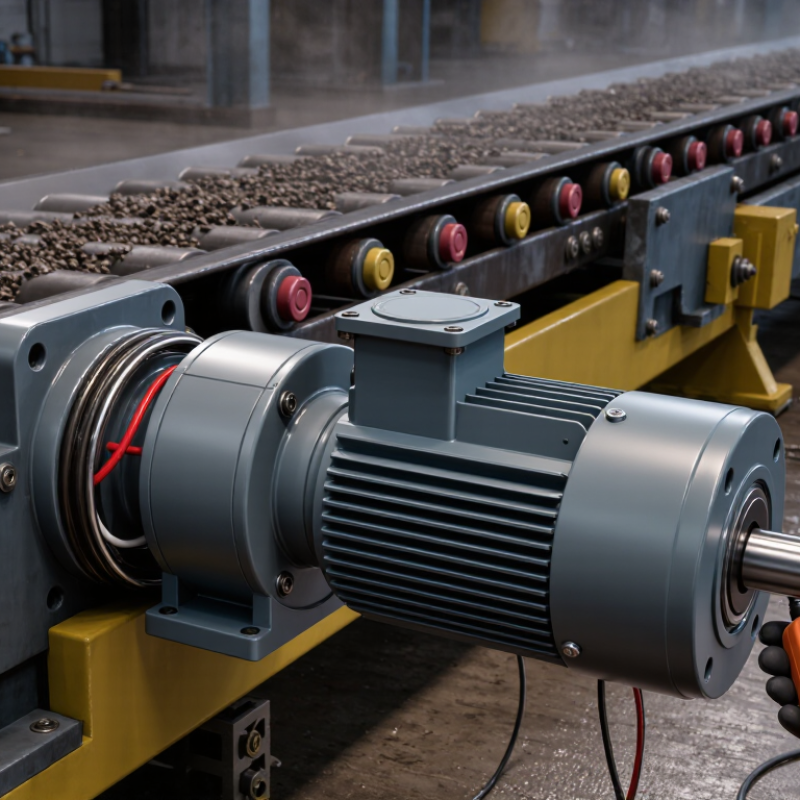
How to Choose a Heavy Duty Gear Motor?

Define the Application and Operating Conditions

How to Choose a Heavy Duty Gear Motor?

Define the Application and Operating Conditions

Start with the machine, not the motor catalog. Describe what the gear motor must move, how quickly it must move, and how often it will run. A conveyor carrying uneven loads needs different support from a mixer with steady resistance. Note the required output speed, estimated torque, and any brief spikes during startup or jams. Measure where possible. A rough guess can send the selection in the wrong direction.

Record the duty cycle and surroundings, too. Will the motor run continuously, or start and stop every few minutes? Frequent starts can create extra heat and mechanical stress. Check ambient temperature, dust, moisture, washdown exposure, and available mounting space. Also consider shaft direction and installation angle. Details get missed. I have seen a seemingly suitable unit become awkward to install because the cable entry faced a nearby frame. That is a small mistake with real consequences.

Tips: Keep a simple operating log. Record load changes, run time, starts per hour, and unusual vibration. If the load is uncertain, test the machine under its heaviest normal condition and leave a sensible margin. Do not size around a rare, unrealistic worst case without checking it; oversizing can create cost and control issues. Ask a qualified engineer to review critical loads and thermal limits.

Calculate Torque, Speed, and Power Requirements

How to Choose a Heavy Duty Gear Motor?

Calculate Torque, Speed, and Power Requirements

Start with the driven load, not the motor catalogue. Find the required output speed in revolutions per minute and the torque needed at the shaft. For a conveyor, include the weight of the belt and material, plus friction and any incline. A load that runs smoothly may still demand much more torque when starting. Measure or estimate carefully; this part is often less certain than it looks.

Calculate mechanical power with this relationship: kilowatts = torque in newton-metres × speed in rpm ÷ 9,550 For example, 200 Nm at 30 rpm requires about 0.63 kW before losses. The gearbox ratio is approximately motor speed divided by desired output speed. Then account for gearbox efficiency, and check that the selected motor can handle the resulting power. A calculation is a starting point, not a guarantee.

Check peak torque, operating hours, starts per hour, and load changes. A machine that starts under a full load may need a higher service factor than one running steadily. Confirm the gearbox’s permitted output torque and the motor’s thermal capacity, too. I would revisit assumptions after observing the actual machine; real friction can be stubborn. A small margin helps, but an oversized unit can waste energy and space.

Select the Gearbox Type and Reduction Ratio

For a heavy-duty gear motor, choose the gearbox type from the load, shock level, mounting space, and required output speed. A helical gearbox suits steady, efficient power transmission; a bevel-helical unit helps when the drive direction must turn through 90 degrees. A worm gearbox can fit tight spaces, but its heat and efficiency need careful checking under continuous load. The U.S. Department of Energy’s 2008 motor-systems sourcebook estimates that motor-driven systems use about 68% of industrial electricity. That figure is a reminder: gearbox losses matter, especially in equipment running all day. Check the actual duty cycle, not just the motor’s nameplate rating.

Set the reduction ratio by dividing motor speed by required output speed. For example, a 1,750 rpm motor driving a conveyor at 35 rpm needs roughly a 50:1 ratio. Then verify output torque, service factor, starting frequency, and peak load against the gearbox manufacturer’s rating method and applicable AGMA guidance. A ratio alone is not a sizing decision. A conveyor carrying wet aggregate may need more starting torque than its steady running load suggests. It is easy to overlook that detail.

For a reversing mixer or crusher, confirm that the gearbox tolerates repeated starts and torque shocks. Ask for thermal and mechanical ratings at the actual speed and ambient temperature. If the calculated ratio falls between standard reductions, do not assume the nearest option is harmless; check the resulting speed and torque at the driven shaft. The first estimate may be wrong. That is worth admitting.

How to Choose a Heavy Duty Gear Motor: Gearbox Type and Reduction Ratio

Estimated output speed at different reduction ratios, assuming a constant motor input speed of 1,750 rpm.

How to use this chart: A higher reduction ratio lowers output speed and, in an ideal gearbox, increases output torque by the same ratio. Actual torque is also affected by gearbox efficiency and motor limits. Choose a gearbox type based on load, duty cycle, mounting, and operating conditions; confirm the required ratio and service ratings with the manufacturer.

Evaluate Motor Construction, Materials, and Protection

A heavy-duty gear motor must withstand more than its rated load. Check the housing, shaft, bearings, and gear teeth for solid, consistent construction. A rigid cast-metal housing can reduce vibration and help maintain alignment under repeated starts. Look for clean machining around mounting faces and shaft seats. Small flaws matter.

Material choice depends on the working environment. Hardened steel gears often handle high contact stress, while suitable alloy shafts resist bending and wear. Bronze components may help in some gear designs, but compatibility and lubrication still matter. Ask for material specifications and rated duty details, not just a “heavy-duty” label. That label alone tells you little. Inspect seals and bearing arrangements, too; oil leaks can quietly shorten service life.

Protection should match actual exposure. For dusty workshops, sealed connectors and an appropriate enclosure rating can limit contamination. Outdoor equipment may need corrosion-resistant coatings and protected cable entries. In washdown areas, verify the stated ingress protection rating and confirm that it covers the complete motor assembly. A high rating is not a substitute for sound installation. Consider ambient temperature, overload protection, and maintenance access before choosing. I would also compare the stated service conditions with your real operating cycle; catalog conditions rarely match perfectly. When uncertain, request test data or a written operating range from the supplier.

How to Choose a Heavy Duty Gear Motor? — Evaluate Motor Construction, Materials, and Protection
Evaluation Area What to Check Suitable Heavy-Duty Features Why It Matters Selection Tip
Gear housing Housing material, wall thickness, rigidity, and access for inspection Rigid cast iron or engineered aluminum housing selected for the load and environment; reinforced mounting points Helps maintain gear alignment and resist vibration, impact, and operating loads For shock loads or frequent starts and stops, prioritize rigidity and verify the manufacturer’s permitted load limits.
Gears Gear material, tooth geometry, heat treatment, and manufacturing quality Hardened steel gears for demanding loads; accurately finished teeth and documented service factors Gear strength and contact quality influence torque capacity, wear, noise, and service life Confirm rated output torque at the actual speed and duty cycle, not just the motor’s nominal power.
Bearings and shafts Bearing arrangement, shaft dimensions, seals, and allowable radial or axial loads Bearings sized for operating loads; robust shafts and effective seals at exposed openings External forces from belts, chains, or couplings can shorten bearing life if they exceed ratings Compare application loads with the specified shaft-load limits and avoid using the output shaft as a support.
Lubrication Lubricant type, quantity, operating temperature range, and maintenance requirements Lubrication suited to the gear design and installation position; accessible inspection or service points where applicable Proper lubrication reduces friction and wear and helps control operating temperature Check whether the unit is supplied filled, whether periodic changes are required, and whether mounting orientation affects lubrication.
Motor insulation and winding Insulation system, winding temperature limits, and compatibility with the power supply or drive Insulation and thermal protection appropriate to ambient temperature, load, and variable-speed operation Electrical and thermal stress can cause premature winding deterioration Confirm voltage, frequency, starting method, and inverter compatibility before selecting the motor.
Ingress protection Enclosure rating against solid objects and water under the applicable rating standard An IP rating matched to dust, splash, washdown, or outdoor exposure Ingress protection helps limit damage from environmental contaminants but does not by itself guarantee corrosion resistance Specify the actual exposure. Do not assume that an IP rating makes a motor suitable for immersion or high-pressure washdown.
Corrosion resistance Housing finish, fasteners, shaft material, and exposure to chemicals or salt Coatings and materials selected for the site; compatible seals and corrosion-resistant exposed components Corrosion can weaken surfaces, damage seals, and make maintenance difficult For coastal, chemical, or food-processing environments, verify material and coating suitability with the supplier.
Thermal protection Temperature sensors, overload protection, cooling method, and permitted ambient temperature Suitable thermal protection and adequate heat dissipation for the required duty Overheating can reduce insulation life and may indicate overload, poor ventilation, or incorrect sizing Check the duty cycle, starts per hour, ambient temperature, and ventilation clearance.
Mounting and installation Mounting position, foot or flange dimensions, alignment, and ventilation clearance Mounting arrangement compatible with the machine, with secure supports and access for maintenance Incorrect alignment or restricted airflow can increase vibration, bearing load, and temperature Confirm the approved mounting orientation and leave the specified clearance around cooling surfaces.
Service and reliability Inspection access, spare-parts availability, maintenance intervals, and documentation Clear service instructions, available replacement components, and published performance data Maintainability affects downtime and the cost of ownership over the equipment’s service life Review the operating manual and maintenance schedule before finalizing the selection.

Verify Compatibility, Efficiency, Maintenance, and Safety

How to Choose a Heavy Duty Gear Motor?

Verify compatibility before comparing price or rated power. Match the motor’s output speed and torque to the driven load, then check peak starting torque, duty cycle, mounting position, and shaft dimensions. A conveyor carrying wet aggregate may need a different gear ratio and sealing arrangement than a lightly loaded mixer. Leave room for real operating variation; a load rarely behaves like a neat specification sheet.

The U.S. Department of Energy’s Improving Motor and Drive System Performance: A Sourcebook for Industry reports that motor-driven systems use about 54% of U.S. manufacturing electricity. That makes efficiency a practical selection factor, not just a brochure figure. Compare efficiency at the expected operating load, since oversized motors can waste energy.

Check the installation environment, too. Dust, washdown, vibration, and ambient heat affect enclosure choice, lubrication, and bearing life. Ask how oil level and temperature will be inspected, and whether seals and bearings are accessible without removing nearby equipment. Small details matter.

For safety, confirm guarding, secure mounting, and a suitable overload protection plan with a qualified engineer. ISO 12100 provides a framework for machinery risk assessment, but it cannot replace site-specific review.

One often-missed point: the quietest unit is not automatically the safest. Record baseline noise, vibration, and temperature after commissioning; those imperfect first readings can still help reveal changes during maintenance.

FAQS

What information should I gather before choosing a heavy-duty gear motor?

Describe the machine, load, speed, operating hours, and starts per hour. Record uneven loads, startup spikes, jams, vibration, dust, moisture, and available space. Measure where possible. A rough guess can mislead the selection.

How do I calculate the required reduction ratio?

Divide motor speed by the required output speed. A 1,750 rpm motor driving at 35 rpm needs roughly a 50:1 ratio. Then verify output torque, peak load, thermal limits, and actual shaft speed. Ratio alone is not enough.

Which gearbox type suits different applications?

Helical gearboxes suit steady loads and efficient power transfer. Bevel-helical units help when the drive direction turns 90 degrees. Worm gearboxes fit compact spaces, but heat and efficiency need careful checking. Tight spaces create trade-offs.

How should I account for startup and shock loads?

Check starting torque, repeated starts, reversing cycles, and sudden resistance. A wet aggregate conveyor may need much more starting torque than running torque. Mixers and crushers need careful shock-load review. The first estimate may be wrong.

What motor construction details should I inspect?

Check the housing, shaft, bearings, gear teeth, mounting faces, and shaft seats. Rigid cast-metal housings can reduce vibration and protect alignment. Hardened gears may handle high contact stress. Small machining flaws matter.

How do operating conditions affect motor protection?

Match protection to real exposure, including dust, water, heat, and washdown. Check sealed connectors, protected cable entries, corrosion-resistant coatings, and the complete enclosure rating. A high rating cannot fix poor installation.

How important are efficiency and heat management?

Gearbox losses matter when equipment runs all day. Frequent starts also create heat and mechanical stress. Request thermal ratings at the actual speed, load, and ambient temperature. Heat is easy to underestimate.

What mistakes commonly occur during gear motor selection?

Choosing by catalog label alone is risky. Oversizing may increase cost and create control problems. Undersizing can cause overheating or early wear. I would keep an operating log and ask an engineer to review critical loads.

Conclusion

Choosing a Heavy Duty Gear Motor starts with a clear understanding of the application and operating conditions. Consider the load type, duty cycle, operating environment, and any starting or stopping demands. Then calculate the required torque, output speed, and power, allowing for changing loads and suitable operating margins. These figures provide a practical basis for selecting a motor and gearbox combination that can perform reliably without being unnecessarily oversized.

Next, compare gearbox types and reduction ratios to match the desired output speed and torque. Assess the motor’s construction, materials, and protection features in relation to temperature, dust, moisture, and other site conditions. Before making a final selection, confirm that the motor and gearbox are compatible with the equipment and installation, and review efficiency, maintenance needs, and safety provisions. A balanced evaluation of these factors helps ensure dependable operation and supports a longer service life.

Isabella

Isabella

Isabella is a dedicated marketing professional with a sharp focus on driving brand growth and engagement through strategic content creation. With an extensive background in digital marketing, she combines her passion for storytelling with her keen understanding of industry trends to deliver......