How to Find China Top Precision Gear Motor Suppliers?

Time:2026-09-19 Author:Sienna
0%

Finding China’s top Precision Gear Motor suppliers requires more than comparing catalog prices. It demands evidence from the factory floor, engineering documents, and customer results. Grand View Research estimated the global gear motor market at approximately USD 27.1 billion in 2023, with continued growth expected through 2030. MarketsandMarkets also identifies automation, robotics, and energy-efficient machinery as important growth drivers. These figures suggest strong demand, but they do not prove that every supplier can deliver stable precision.

Alexander H. Slocum, a respected precision-engineering researcher, offers a useful principle: “Precision is a system property, not a single component specification.” Buyers should test that principle against real details. Examine backlash data, reduction ratios, rated torque, noise levels, thermal performance, and lifecycle testing. Ask for inspection records, material certificates, and sample-unit results. A clean showroom is not enough.

Look beyond the quotation.

A capable Chinese supplier should explain how gears are ground, how bearings are preloaded, and how final assemblies are tested. ISO 9001 certification can support process credibility, but it cannot replace independent verification. The International Federation of Robotics continues to report rising industrial robot adoption, increasing pressure for compact and repeatable drive systems. Still, supplier selection is not perfectly predictable. Even experienced buyers can overlook communication delays, tolerance drift, or weak after-sales support.

This guide examines practical methods for identifying reliable Precision Gear Motor manufacturers in China. It focuses on measurable performance, transparent production capability, export experience, and long-term service. The goal is not to find the cheapest factory. It is to find a supplier whose promises survive testing.
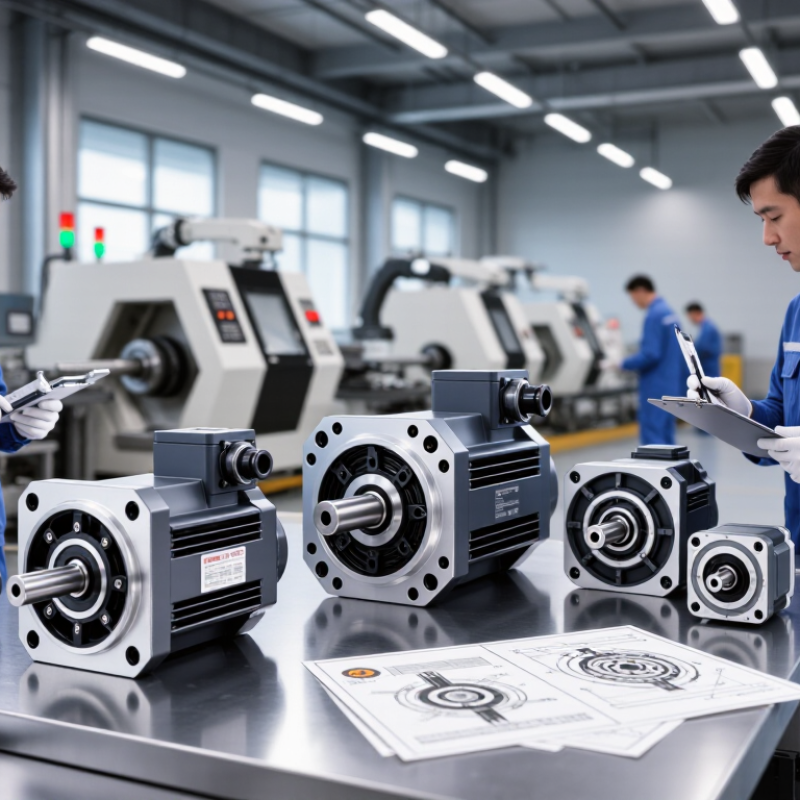
How to Find China Top Precision Gear Motor Suppliers?

Define Requirements: Ratio, Torque, Speed, Backlash, and Duty Cycle

How to Find China Top Precision Gear Motor Suppliers?

Define requirements before contacting suppliers. State the reduction ratio, output torque, speed range, backlash limit, and duty cycle. A ratio such as 20:1 does not guarantee suitable performance. Ask for continuous torque, peak torque, and efficiency at your actual operating speed. Torque can rise sharply during acceleration.

Backlash deserves specific attention. Request measured values in arcminutes, test conditions, and load direction. A supplier should explain whether the figure is typical or guaranteed. For indexing equipment, even a small error can affect repeatability. Ask for sample inspection records, not only catalog claims. IEC 60034 test information can also support motor efficiency comparisons.

Duty cycle is often underestimated. Describe running hours, starts per minute, ambient temperature, mounting position, and available cooling. The U.S. Department of Energy reports that motor-driven systems can consume more than half of industrial electricity, so efficiency affects operating cost. The International Energy Agency’s Energy Efficiency 2023 report also identifies industry as a major global energy user. These figures make thermal design worth checking.

Request a complete datasheet, tolerance table, noise data, and endurance-test method. ISO/IEC 17025-accredited testing adds credibility when results matter. Compare at least three suppliers using the same specification sheet. My own caution is simple: a lower price may hide weaker bearings or optimistic torque ratings. Sometimes, the specification is still incomplete. Ask for a prototype under real load, then review temperature, vibration, and backlash after testing.

Set Motor Efficiency Targets Using IEC 60034-30-1 IE2–IE4 Classes

How to Find China Top Precision Gear Motor Suppliers?

IEC 60034-30-1 gives buyers a practical efficiency language. IE2 means high efficiency. IE3 means premium efficiency. IE4 means super-premium efficiency. These classes apply to the motor, not automatically to the complete gear motor assembly. This distinction matters. A gearbox adds mechanical losses. A compact unit may carry an IE3 motor, yet deliver lower system efficiency under real operating conditions.

The International Energy Agency reports that motor-driven systems consume roughly half of global electricity. Its Energy Efficiency 2023 analysis also highlights large savings from efficient industrial equipment. When screening Chinese precision gear motor suppliers, request tested efficiency at your actual voltage, frequency, speed, and load. Ask for IEC 60034-30-1 test references and separate gearbox-loss data. Check rated torque, thermal performance, noise, backlash, and duty cycle. IE4 sounds better, but it may increase cost or reduce availability in certain power ranges. That assumption needs verification. Small errors matter.

Tips: Define an IE2, IE3, or IE4 target before requesting quotations. Require test reports from an accredited laboratory, not only a catalogue value. Compare efficiency at 25%, 50%, and 100% load. Review sample measurements, production tolerances, and traceable quality records. A supplier should explain deviations clearly. Perfect data is rare; unexplained data is the real warning sign.

This chart compares representative minimum nominal efficiencies for four-pole, 50 Hz three-phase motors across selected output ratings under IEC 60034-30-1 IE2, IE3, and IE4 efficiency classes. Actual motor efficiency may vary by design, voltage, frequency, and operating load. Use these targets when evaluating precision gear motor suppliers and requesting verified test data.

Check Gear Accuracy Against ISO 1328 Grades and Backlash in Arcminutes

How to Find China Top Precision Gear Motor Suppliers?

When evaluating Chinese precision gear motor suppliers, begin with measurable gear accuracy. Ask which ISO 1328 grade the supplier follows, and request the actual inspection report. A stated grade is not enough. The report should identify tooth deviation, profile deviation, lead deviation, and measurement conditions.

Backlash deserves equal attention. Suppliers may quote backlash in arcminutes, but the number can change under different loads, temperatures, and rotation directions. Ask whether the value is measured at the output shaft. Also confirm the test torque, speed, lubrication, and reduction ratio. For example, a specification of 3 arcminutes means limited angular clearance, not zero movement. It may still affect positioning after repeated reversals.

Request sample data from several production batches. Check whether the results remain close to the claimed ISO 1328 grade. I have found that a clean sample can hide process variation. That is a useful warning. Ask for assembly tolerances, runout records, and a clear acceptance method. A supplier with experienced engineers should explain why backlash increases, not simply promise a smaller figure. They should also support incoming inspection and corrective action.

Do not judge precision by photos or polished certificates. Compare test instruments, traceability, and operator experience. A practical trial under your motor’s real load often reveals more than a sales sheet. My own approach is cautious: verify every critical number, repeat the test, and record what was not measured.

Audit Suppliers Through ISO 9001, IATF 16949, IEC 60529, and Test Data

Finding China’s top precision gear motor suppliers starts with evidence, not attractive catalog photos. During a factory audit, review the ISO 9001 certificate, scope, expiry date, and issuing body. Then inspect quality records on the production floor. Check incoming inspection, calibration, traceability, and corrective actions. Paperwork is only the beginning.

If the motor serves automotive applications, IATF 16949 deserves closer attention. Ask whether the certification covers the actual motor plant, not only a related office. Review process flow charts, control plans, failure analysis, and change-management records. For dust and water protection, verify IEC 60529 testing. Request the test method, enclosure design, sample configuration, and laboratory details. Ask for the raw report.

Test data should match your operating conditions. Request torque-speed curves, efficiency, backlash, noise, temperature rise, and endurance results. Require test dates, sample sizes, instruments, and acceptance limits. Numbers need context. One polished chart proves little. Compare reports with serial numbers from production samples. A witnessed test can reveal unstable lubrication, vibration, or inconsistent assembly.

A practical weakness in my early audits was trusting complete-looking folders too quickly. Later, I learned to compare documents against operators’ actual routines. Suppliers may have valid systems, yet weak execution on busy shifts. Leave room for doubt. Repeat critical checks before approving the supplier.

How to Find China Top Precision Gear Motor Suppliers? - Audit Suppliers Through ISO 9001, IATF 16949, IEC 60529, and Test Data

Audit Dimension Applicable Standard What to Verify Objective Evidence Required Acceptance Benchmark Audit Result Weight
Quality management system ISO 9001:2015 Confirm that the certificate covers the actual manufacturing site and the scope includes gear motors, transmission assemblies, or related precision components. Valid certificate, certification-body details, audit dates, site address, scope statement, internal audit records, corrective-action records. Certificate is valid, scope is relevant, site address matches the production location, and major nonconformities are closed. Pass if verified 15%
Automotive quality capability IATF 16949:2016 Determine whether automotive-specific controls are required for the application and whether the supplier operates under an applicable automotive QMS. Valid IATF certificate where applicable, customer-specific requirements, APQP files, PPAP samples, FMEA, control plan, MSA, SPC records. Required for automotive production when specified by the customer or supply chain; evidence must cover the audited product and site. Conditional 15%
Ingress protection IEC 60529 Check whether the enclosure rating matches the installation environment and whether the motor is tested as a complete assembly. Laboratory report, test configuration, sample identification, test date, mounting orientation, gasket condition, and photographs. For an IP65 claim: dust-tight performance for the first digit and protection against water jets for the second digit, with no functional failure after testing. Record measured result 10%
Gear ratio accuracy Product specification and approved drawing Measure the actual reduction ratio under no-load conditions and compare it with the approved specification. Calibrated tachometer or encoder records, sample number, input speed, output speed, and calculation method. Measured ratio remains within the approved product tolerance; the tolerance must be stated on the drawing or datasheet. Example: 49.96:1 vs. 50:1 10%
Output torque Approved specification and end-of-line test plan Verify continuous torque, peak torque, speed, supply voltage, and duty cycle at the intended operating point. Dynamometer report with calibrated torque transducer, temperature, current, voltage, speed, and test duration. Measured continuous torque meets the approved rating without abnormal noise, overheating, or speed instability. Example: 1.02 N·m at 60 rpm 15%
Backlash and positioning repeatability Approved drawing and application requirement Measure angular backlash, return error, and repeatability at the specified load and shaft position. Rotary encoder or optical measurement records, test load, direction-change method, number of cycles, and ambient temperature. Result is below the application limit; the limit must be defined before supplier comparison. Example: 0.35° backlash 15%
Efficiency and temperature rise Product specification and thermal test procedure Check efficiency, winding temperature, housing temperature, and thermal stability at rated load. Power analyzer data, ambient temperature, thermal camera or thermocouple records, stabilization time, and duty cycle. Temperature remains within the motor insulation and application limits; efficiency is consistent with the approved specification. Example: 78.4% efficiency 10%
Noise and vibration Approved specification and customer test method Evaluate acoustic noise, vibration, gear mesh condition, bearing condition, and run-in behavior. Sound-level meter and vibration analyzer records, measurement distance, background noise, speed, load, and fixture details. Test result is below the agreed limit and shows no abnormal peaks or progressive increase during the endurance run. Example: 58 dB(A) at 0.5 m 5%
Dimensional and material control ISO 9001:2015 and approved drawing Verify gear tooth geometry, shaft dimensions, bearing seats, housing interfaces, materials, and heat-treatment condition. Coordinate-measuring-machine reports, calibrated gauges, material certificates, hardness records, and traceability labels. All critical characteristics meet drawing tolerances and each production lot is traceable to incoming material and process records. Pass when records match samples 10%
Reliability and endurance Customer-approved reliability plan Confirm life testing under rated load, duty cycle, direction changes, ambient conditions, and lubrication requirements. Endurance log, cycle count, load profile, temperature trend, failure criteria, teardown report, and corrective actions. Test duration and acceptance criteria are agreed before testing; no unacceptable wear, seizure, leakage, or performance drift is recorded. Example: 2,000 h completed 5%
Production and delivery capability ISO 9001:2015 operational controls Assess capacity, critical-process control, inspection flow, change management, lead time, and contingency planning. Process flow chart, capacity calculation, production schedule, inspection plan, change-notification procedure, and business-continuity plan. Capacity covers forecast demand with documented control of bottlenecks, engineering changes, and supply interruptions. Verify during site audit 5%
Total Evaluation Weight 100%
Audit rule: A certificate alone should not be treated as proof of product capability. Confirm certificate validity, applicable site scope, calibration status, sample traceability, test conditions, and raw test records before approving a precision gear motor supplier.

Compare MOQ, Lead Time, Warranty, and Total Cost Before Sample Validation

Finding reliable precision gear motor suppliers requires more than checking catalog torque. Before requesting samples, compare MOQ, lead time, warranty, and total cost in one worksheet. Ask whether the MOQ applies to each ratio, voltage, and connector, or only to a mixed order. A low MOQ sounds attractive. It may carry a higher unit price.

Request a written production schedule with drawing approval, tooling, assembly, and final inspection dates. Record normal and worst-case lead times. Suppliers should explain how they test backlash, noise, efficiency, and load endurance.

Ask for recent inspection records, calibration details, and customer references from similar applications. A clear warranty should state coverage, exclusions, response time, and replacement procedures.

“Twelve months” means little without operating conditions.

Calculate total cost per usable motor, not quoted price alone. Include tooling, samples, freight, import charges, spare units, testing, and delayed production costs. One supplier may offer a cheaper motor but require expensive custom fixtures.

My early comparisons missed packaging damage and retest labor. That mistake changed the real price. Keep a small risk allowance. Before sample validation, score each supplier against the same technical and commercial evidence. Estimates can still move. Leave room for that uncomfortable possibility.

FAQS

What information should I provide before contacting a precision gear motor supplier?

State the reduction ratio, continuous torque, peak torque, speed range, backlash limit, and duty cycle. Include starts per minute, running hours, ambient temperature, mounting position, and cooling conditions. A 20:1 ratio alone proves very little.

How should I compare torque and speed performance?

Request continuous torque, peak torque, efficiency, and temperature at your actual operating speed. Acceleration can sharply increase torque demand. Test conditions matter. Ask for measured values, not optimistic catalogue ratings.

How can I evaluate backlash correctly?

Request backlash in arcminutes at the output shaft. Confirm load direction, test torque, speed, temperature, lubrication, and reduction ratio. A value of 3 arcminutes means limited clearance, not zero movement. Small errors matter.

What should an accuracy inspection report include?

Ask for the applicable ISO 1328 grade and actual inspection records. Reports should include tooth, profile, and lead deviations. Check measurement conditions and instrument traceability. A polished certificate is not enough.

Does a high motor efficiency class guarantee high system efficiency?

No. Efficiency classes describe the motor, not automatically the complete gear motor. Gearbox losses can reduce delivered efficiency. Request results at 25%, 50%, and 100% load. Verify voltage, frequency, speed, and torque.

How should I assess supplier testing credibility?

Request accredited laboratory reports when critical results affect your design. Review tolerance tables, noise data, endurance methods, and sample records. Compare identical specifications across at least three suppliers. More data helps.

What should I test in a prototype?

Test the prototype under real load and repeated reversals. Record temperature, vibration, noise, speed, torque, and backlash afterward. Inspect the output shaft and mounting area. One trial may still miss long-term variation.

Can a lower quotation indicate a hidden risk?

It can. Lower cost may reflect weaker bearings, limited testing, or optimistic torque ratings. Do not assume the cheapest option is unsuitable. Ask what remains unmeasured. The specification may still be incomplete.

Conclusion

Finding a reliable Precision Gear Motor supplier in China starts with clearly defining the application requirements, including reduction ratio, torque, operating speed, allowable backlash, load profile, and duty cycle. Efficiency targets should be established according to IEC 60034-30-1, with IE2 to IE4 classes providing a useful framework for comparing motor performance and energy consumption. Gear accuracy should also be verified against ISO 1328 grades, while backlash should be specified and measured in arcminutes to ensure smooth, repeatable motion.

Supplier evaluation should include a review of ISO 9001 or IATF 16949 quality systems, IEC 60529 protection ratings, inspection procedures, and complete test data. Buyers should compare MOQ, production lead time, warranty terms, communication, and total cost rather than focusing only on the initial quotation. Finally, sample validation is essential for confirming torque, speed, temperature rise, noise, efficiency, accuracy, and long-term reliability before placing a larger order.

Sienna

Sienna

Sienna is a skilled marketing professional with a deep expertise in our company’s core products and services. With a passion for innovation and detail, she plays a pivotal role in crafting insightful blog posts that not only highlight the unique features of our offerings but also provide valuable......