2026 Top Three Phase AC Motor Manufacturers?

Time:2026-10-19 Author:Mason
0%

Choosing the 2026 top three-phase AC motor manufacturers requires more than comparing sales figures. Buyers need evidence from factory floors, efficiency tests, service records, and long-term operating costs. The strongest candidates are likely to include Siemens, ABB, and WEG, although regional demand may change the ranking. A motor that performs well in Germany may not suit a dusty cement plant in India or a humid processing line in Brazil.

Nikola Tesla, whose work shaped modern alternating-current motors, described the principle clearly: “The magnetic poles are displaced in space and in time.” That idea still drives today’s Three Phase AC Motor designs. Modern manufacturers build on it with premium efficiency classes, inverter-duty insulation, vibration monitoring, and digital maintenance tools. The details matter. A 250 kW motor running continuously can lose substantial energy through poor alignment, overloaded bearings, or incorrect voltage selection.

Real experience remains important. Installation teams often discover that catalogue efficiency does not guarantee efficient operation. Cooling fins collect dust. Couplings wear. Variable-frequency drives may create electrical stress. These practical issues deserve equal attention beside laboratory specifications.

This comparison will examine Siemens, ABB, and WEG through measurable criteria, including motor efficiency, product range, reliability, customization, global support, and lifecycle value. The ranking is not absolute. Data changes. Markets differ. Some conclusions may need revision when new 2026 product releases, certifications, or service results appear. A credible manufacturer should therefore be judged not only by its name, but by how its Three Phase AC Motor performs after years of demanding work.
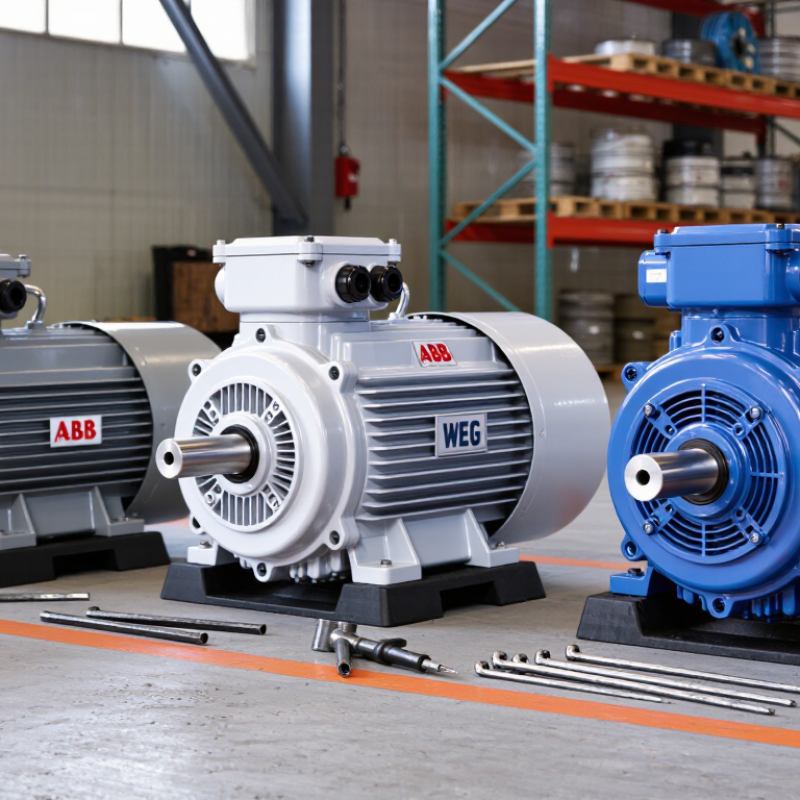
2026 Top Three Phase AC Motor Manufacturers?

Three-Phase AC Motors: Definition, Design, and Operating Principles

Three-Phase AC Motors: Definition, Design, and Operating Principles

A three-phase AC motor converts electrical energy into continuous mechanical rotation. It uses three alternating currents, spaced 120 electrical degrees apart. These currents create a rotating magnetic field inside the stator. The rotor follows this field and produces useful torque. In common induction motors, the rotor turns slightly slower than the magnetic field. This difference is called slip. Without slip, electromagnetic torque would not develop.

The design includes a laminated steel stator core, insulated copper windings, a rotor, bearings, and a cooling system. Many industrial motors use a squirrel-cage rotor because it is durable and requires little maintenance. The enclosure protects internal parts from dust, moisture, and accidental contact. However, enclosure ratings must match the installation environment. A motor running in a hot, dusty room may lose efficiency faster than expected. Simplified diagrams often ignore this practical problem.

Tips: Check voltage balance before operation. Unequal phase voltage can increase heating and shorten insulation life. Listen for unusual bearing noise. Measure current under a normal load, not only at startup. Keep cooling passages clean. Correct alignment also matters; a small coupling error can create vibration. I have found that maintenance teams sometimes focus on electrical readings and overlook mechanical wear. That assumption deserves regular review.

Key Criteria for Ranking Three-Phase AC Motor Manufacturers in 2026

Ranking the top three-phase AC motor manufacturers in 2026 requires more than comparing catalog prices. The strongest evaluation begins with measured efficiency, documented testing, and field reliability. The International Energy Agency reports that motor-driven systems consume nearly half of global electricity. Even small efficiency differences can therefore affect a factory’s energy bill.

Compliance should be checked against IEC 60034 requirements, including efficiency classification, temperature rise, insulation, and performance testing. Independent laboratory data matters more than polished brochures. A manufacturer should also provide load curves, vibration limits, bearing-life estimates, and traceable quality records. The U.S. Department of Energy’s Motor System Market Assessment highlights the importance of system-level optimization, not motor efficiency alone. A motor may perform well on paper but waste energy when poorly matched with a pump, fan, or variable-speed drive.

Tips: Request test reports for the exact motor frame and voltage. Compare efficiency at 50%, 75%, and 100% load. Check service response times, spare-parts availability, and warranty exclusions. Site audits can reveal practical weaknesses, such as excessive noise, hot terminal boxes, or repeated bearing failures. No ranking is perfect. A spreadsheet can miss installation quality and operator training. The better question is whether a supplier can prove consistent performance across demanding operating conditions. Consider lifecycle cost, not only purchase price. Shamefully, some buyers still overlook downtime.

2026 Top Three-Phase AC Motor Manufacturers: Key Ranking Criteria

This 100-point evaluation framework ranks manufacturers by the factors most relevant to industrial three-phase AC motor selection. Efficiency is aligned with IEC 60034-30-1, performance testing with IEC 60034-2-1, and motor ratings and operating conditions with IEC 60034-1. The scores represent criterion weights rather than company or brand performance.

Energy efficiency and lifecycle performance receive the highest weighting because electricity consumption typically represents the largest ownership cost for continuously operated motors. Reliability, variable-speed-drive compatibility, standards compliance, serviceability, and supply capability complete the ranking model.

Leading Three-Phase AC Motor Manufacturer One: Products and Strengths

In 2026, a leading three-phase AC motor manufacturer earns attention through practical engineering, not exaggerated claims. Its product range covers standard induction motors, high-efficiency models, brake motors, and variable-speed designs. These units support pumps, compressors, conveyors, fans, and machine tools.

The manufacturer builds motors with cast-iron or aluminum housings, sealed bearings, and protected cooling systems. Copper windings improve electrical performance and help control heat during continuous operation. Many models support common industrial voltages and mounting arrangements. This simplifies replacement work in factories with mixed equipment. Technicians also value clear wiring diagrams, accessible terminal boxes, and tested vibration levels.

Small details matter.

Quality control usually includes insulation checks, no-load testing, temperature monitoring, and noise inspection. In field experience, correct sizing often matters more than a premium label. A motor with the wrong service factor can overheat, even when its efficiency rating looks impressive. The manufacturer provides technical data for torque, speed, protection class, and operating duty. However, its documentation may not explain every installation condition clearly. That weakness deserves attention from engineers and maintenance teams. Real performance still depends on alignment, ventilation, voltage stability, and regular bearing inspection. A strong motor cannot repair poor installation practices.

Leading Three-Phase AC Motor Manufacturer Two: Products and Strengths

Leading Three-Phase AC Motor Manufacturer Two: Products and Strengths

The second leading three-phase AC motor manufacturer serves factories, pump stations, compressors, and material-handling lines. Its range covers squirrel-cage induction motors, brake motors, and high-efficiency models. Standard frames simplify replacement during planned maintenance. This matters when a production line cannot wait. Motors are available in common voltage, frequency, and mounting combinations. Engineers can also request thermal sensors, reinforced bearings, or outdoor protection. Not every option fits every duty.

Its main strength is practical engineering rather than a crowded catalog. Each motor is checked for winding resistance, insulation performance, vibration, noise, and no-load current. Production records support traceability from raw materials to final inspection. In field use, technicians often value stable starting torque and predictable temperature rise. Those details reduce nuisance trips on conveyors and pumps. Efficiency ratings help operators estimate energy costs across long working hours. Proper sizing remains essential. An efficient motor can still waste power when oversized.

The manufacturer also supports selection through load calculations, duty-cycle reviews, and installation guidance. Its technical team can explain differences between efficiency classes, enclosure ratings, and inverter compatibility. This helps buyers compare quotations without relying on price alone. After delivery, clear manuals and accessible replacement parts can shorten service visits. Yet its documentation could be more visual for first-time installers. That weakness deserves attention, especially in multilingual projects. Real reliability appears over years, under dust, heat, starts, and stops.

Leading Three-Phase AC Motor Manufacturer Three: Products and Strengths

2026 Top Three Phase AC Motor Manufacturers: Leading Three-Phase AC Motor Manufacturer Three

The third leading three-phase AC motor manufacturer stands out through practical product coverage and dependable engineering. Its portfolio commonly includes low-voltage induction motors, brake motors, high-efficiency units, and customized designs for pumps, fans, compressors, and conveyors. Sizes may range from compact fractional-horsepower models to large industrial motors exceeding several hundred kilowatts.

Its strength is application flexibility. Engineers can specify IE3 or IE4 efficiency classes, IP55 or higher protection, insulated bearings, and inverter-compatible winding systems. These details matter in dusty factories, humid processing areas, and installations with frequent speed changes. A robust cast-iron frame can reduce vibration, while balanced rotors help control noise during continuous operation.

Field assessments often focus on temperature rise, starting current, bearing life, and efficiency under partial load. This manufacturer generally supports those checks with test reports, dimensional drawings, and routine quality inspections. That helps maintenance teams replace motors without redesigning the mounting arrangement.

Still, no supplier fits every application perfectly. Some customized motors require longer production schedules, and documentation can vary between regions. Buyers should verify terminal-box orientation, voltage tolerance, service factor, and local certification before ordering. A motor may look suitable on paper but perform poorly if ventilation, load selection, or alignment is overlooked. Small details matter.

2026 Top Three Phase AC Motor Manufacturers? - Leading Three-Phase AC Motor Manufacturer Three: Products and Strengths

Comparative overview of three leading manufacturer profiles for industrial three-phase AC motor applications

Evaluation Dimension Manufacturer Profile 1 Manufacturer Profile 2 Manufacturer Profile 3
Primary Product Focus General-purpose squirrel-cage induction motors for pumps, fans, conveyors, compressors, and machine tools. High-efficiency industrial motors designed for continuous-duty manufacturing and process equipment. Application-focused motors for demanding environments, including heavy-duty machinery and variable-speed systems.
Common Motor Type Three-phase asynchronous motors with cast-iron or aluminum housings. Three-phase induction motors with optimized magnetic circuits and low-loss electrical steel. Three-phase induction motors compatible with inverter-driven operation and frequent industrial cycling.
Typical Efficiency Classes IE2–IE3
Suitable for standard industrial installations and replacement projects.
IE3–IE4
Focused on reducing energy consumption during continuous operation.
IE3–IE4
Designed to maintain efficiency across a broad operating range.
Typical Power Range Approximately 0.12 kW to 315 kW for commonly stocked industrial models. Approximately 0.75 kW to 1,000 kW, depending on the frame size and cooling arrangement. Approximately 0.75 kW to 500 kW for standard and inverter-duty product families.
Common Voltage Options Low-voltage systems commonly configured for 230/400 V or 400/690 V at 50 Hz. Low-voltage systems commonly configured for 230/400 V or 400/690 V at 50 or 60 Hz. Flexible low-voltage configurations, with selected medium-voltage options for larger industrial drives.
Operating Duty S1 continuous duty for stable loads and long operating periods. S1 continuous duty, with selected designs available for high-load industrial service. S1 continuous duty and inverter-duty configurations for variable-load applications.
Protection Ratings Commonly available with IP55 protection; higher protection levels may be specified. Commonly available with IP55 or IP56 protection for industrial environments. Commonly available with IP55, IP56, or higher protection for dust- and moisture-prone locations.
Cooling Methods Usually IC411 totally enclosed fan-cooled construction. IC411 designs are common, with alternative cooling arrangements for higher-power motors. IC411 is common, with additional cooling options for inverter-fed and high-duty applications.
Standards Alignment Typically designed according to IEC 60034 requirements and applicable regional electrical standards. Typically designed according to IEC 60034, with efficiency classification aligned with IEC 60034-30-1. Typically designed according to IEC 60034, with selected configurations supporting NEMA or regional requirements.
Variable-Frequency Drive Compatibility Suitable for standard variable-speed applications when correctly selected and protected. Strong compatibility with variable-frequency drives, including options for reduced bearing currents and improved thermal performance. Strong focus on inverter-duty operation, speed control, braking cycles, and dynamic industrial loads.
Mechanical Construction Aluminum frames for smaller sizes and cast-iron frames for medium and larger sizes. Rugged cast-iron construction is commonly used for higher mechanical strength and vibration resistance. Reinforced housings and flexible mounting arrangements for heavy-duty equipment integration.
Typical Application Strength Broad availability, straightforward replacement, and economical operation for general-purpose equipment. Energy savings, high reliability, and suitability for pumps, fans, compressors, and continuous-process machinery. Adaptability for variable loads, harsh service conditions, and specialized industrial drive systems.
Best-Fit Buyer OEMs, distributors, maintenance teams, and facilities seeking standardized replacement motors. Energy-conscious industrial users with long annual operating hours and demanding efficiency targets. System integrators and industrial operators requiring customized performance or advanced speed control.
Key Selection Considerations Confirm frame size, mounting arrangement, rated speed, voltage, frequency, and starting method. Compare total cost of ownership, efficiency class, annual operating hours, and drive compatibility. Evaluate load profile, ambient conditions, enclosure protection, insulation system, and braking requirements.

Technical note: Actual specifications vary by model, frame size, duty cycle, voltage, frequency, enclosure, and regional standard. Confirm the individual datasheet before purchase or system design.

FAQS

What matters most when ranking three-phase AC motor manufacturers in 2026?

Measured efficiency, independent testing, and field reliability matter most. Purchase price alone can mislead. Check lifecycle cost and downtime.

Which standards should a three-phase AC motor meet?

Check compliance with IEC 60034 requirements. Review efficiency class, temperature rise, insulation, and performance tests. Ask for traceable records.

How should motor efficiency be compared?

Compare efficiency at 50%, 75%, and 100% load. Request results for the exact frame and voltage. Small differences can increase factory energy costs.

Why is system matching important?

A motor may perform well on paper but waste energy in a poor system. Match it carefully with pumps, fans, compressors, or drives. The motor is not working alone.

What technical documents should a manufacturer provide?

Request load curves, torque data, vibration limits, and bearing-life estimates. Clear wiring diagrams also help technicians. Missing details deserve careful questions.

What construction features support reliable operation?

Cast-iron or aluminum housings can suit different industrial conditions. Sealed bearings and protected cooling systems support continuous use. Copper windings help control heat.

What practical problems should buyers inspect on site?

Look for excessive noise, hot terminal boxes, and repeated bearing failures. Check alignment, ventilation, voltage stability, and bearing condition. Small warning signs matter.

Can a high-efficiency motor solve poor installation practices?

No. Incorrect sizing can cause overheating, even with an impressive efficiency rating. A strong motor cannot fix bad alignment or weak maintenance.

How should service support affect the final decision?

Compare response times, spare-parts availability, and warranty exclusions. Ask how quickly common parts can arrive. This area is often underestimated.

Is any manufacturer ranking completely reliable?

No ranking captures every site condition. A spreadsheet may miss operator training and installation quality. That is an uncomfortable limitation.

Conclusion

This article presents a practical overview of the Three Phase AC Motor, explaining its definition, basic construction, and operating principles. It describes how three-phase electrical power creates a rotating magnetic field that drives the rotor, making these motors well suited for industrial equipment, pumps, compressors, fans, conveyors, and other applications requiring reliable and continuous operation. The discussion also considers important design features, including efficiency, torque, speed control, durability, cooling, maintenance requirements, and compatibility with modern drive systems.

The article then introduces three leading Three Phase AC Motor manufacturers selected according to performance, product variety, engineering capability, quality consistency, energy efficiency, customization options, technical support, and long-term value. Each manufacturer is evaluated through its motor range, application strengths, production capabilities, and ability to meet changing industrial demands. By comparing these factors, readers can better understand how to assess manufacturers and choose a suitable motor solution based on operating conditions, power requirements, environmental factors, and total ownership costs.

Mason

Mason

Mason is a seasoned marketing professional with a deep expertise in the company's offerings and a passion for driving brand awareness. With a strong background in digital marketing strategies, he has an innate ability to connect with diverse audiences and effectively communicate product benefits.......